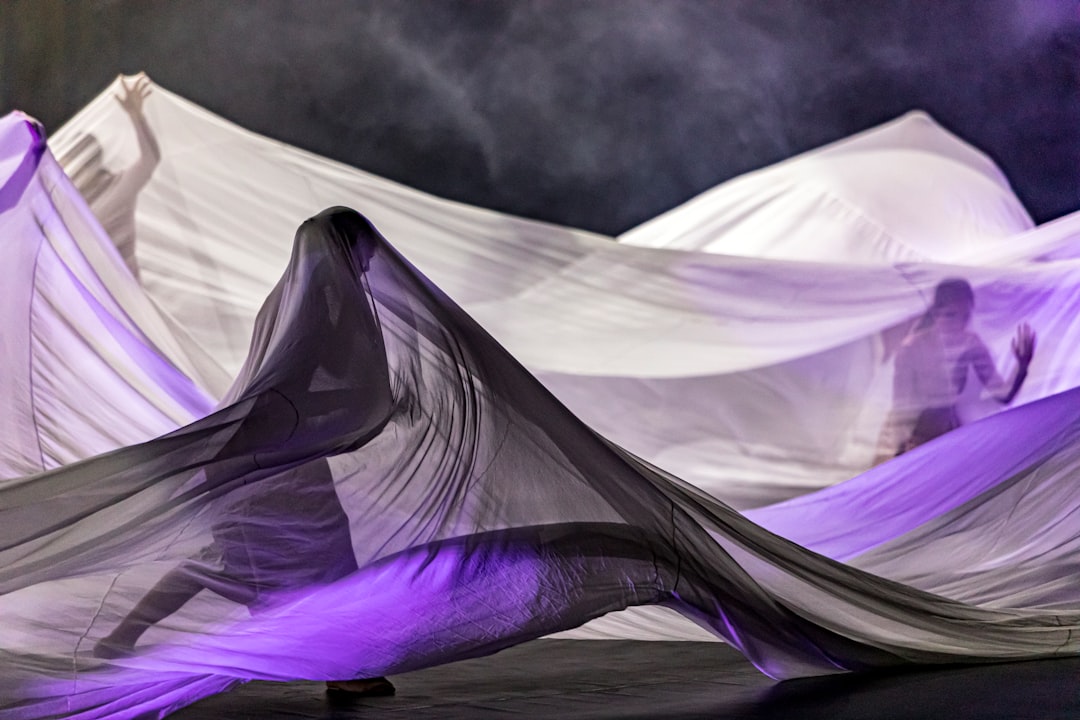
Movement in Motion: Capturing the Essence of Performance Art with Visual AI
A definitive guide to using motion capture and visual AI to decode and present movement-driven narratives in performance art.
Movement in Motion: Capturing the Essence of Performance Art with Visual AI
How can motion capture and visual AI analysis reveal the narrative a dancer or performance artist is telling through posture, tempo, and intent? This definitive guide walks creators, producers, and developer teams through the practical, technical, and ethical steps to capture, interpret, and present human movement so that audiences experience a deeper, data-informed appreciation of performance art.
Introduction: Why this matters for creators and audiences
From intuition to measurable expression
Performance art has always relied on the audience's intuition to decode gesture, space, and rhythm. Visual AI gives creators a second language — structured, data-rich representations of motion — that can augment intuition with measurable insight. Used correctly, motion capture and analysis do not replace human interpretation; they enrich it, enabling creators to quantify tension, pacing, and focus across a performance.
Opportunities for creators and publishers
Publishers and influencers are increasingly looking for ways to turn performances into searchable, monetizable assets: clips auto-tagged by motif, highlight reels generated by movement intensity, or interactive visualizations that extend a live performance into an on-demand experience. For a primer on how creators leap into new digital economies, see our guide on How to Leap into the Creator Economy.
Where visual AI sits in modern art technology
Visual AI analysis intersects with video production, live streaming, and UX-driven interfaces. To understand how AI changes the publishing experience on mobile and beyond, review Beyond the iPhone: How AI Can Shift Mobile Publishing Towards Personalized Experiences. That context helps translate motion intelligence into audience-facing features like personalized camera angles or movement-triggered content recommendations.
Section 1 — Why movement matters: Narratives hidden in motion
Movement as language
Human movement is a semiotic system: speed, acceleration, spatial occupation, and dynamics are all meaningful. Visual AI can extract these low-level features and aggregate them into mid- and high-level descriptors — for example, detecting a shift from constrained to expansive movement that might signal a narrative pivot in a piece.
Temporal structure and dramatic arcs
Performance narratives are temporal. Segmentation algorithms trained on motion features can detect beats, crescendos, and refrains, which are useful both to dramaturgs for analysis and to editors building highlight reels. For tips on packaging live performances into compelling digital products, the lessons in The Art of Live Streaming Musical Performances contain high-value production advice.
Emotion and intent recognition
Modern models combine pose estimation with micro-expression and tempo features to approximate emotional states. These outputs should be treated as probabilistic cues that inform, not dictate, artistic interpretation. Integrating AI-derived emotion cues with human dramaturgy creates a more nuanced storytelling toolkit.
Section 2 — Motion capture techniques: Tools and trade-offs
Overview of capture paradigms
Motion capture falls into several categories: marker-based optical systems, markerless computer vision, inertial measurement units (IMUs), depth cameras, and hybrid setups. Each has trade-offs in cost, intrusiveness, accuracy, and latency — critical decisions for live theatre versus studio work.
Choosing based on artistic constraints
Performance art often demands minimal interference and maximal freedom. Markerless solutions allow for unobtrusive capture on stage, while IMUs or marker systems can provide higher fidelity in controlled environments. When considering streaming and distribution, check production economics and distribution notes in The Evolution of Affordable Video Solutions.
Comparison table: motion capture methods
The table below summarizes common approaches to motion capture across five key dimensions to help you pick the right system for your project.
| Method | Accuracy | Cost | Latency | Best Use |
|---|---|---|---|---|
| Marker-based optical | Very high (sub-mm) | High (studio hardware) | Low | Film, choreography research |
| Markerless CV (2D/3D) | Moderate – improving | Low–Medium (software + cameras) | Low–Medium | Live theatre, site-specific work |
| IMUs (wearables) | High in orientation | Medium | Low | Dance with rapid rotation |
| Depth cameras (LiDAR/Kinect) | Moderate | Low–Medium | Low | Interactive installations |
| Hybrid systems | High | High | Low | Research & mixed-media works |
Section 3 — Visual AI models & architectures for movement analysis
Pose estimation and skeleton extraction
Pose networks such as OpenPose or modern transformer-based estimators provide the foundational skeleton data. This is the raw input for downstream modules: temporal smoothing, kinematic feature extraction, and higher-level classifiers that map motion to narrative labels.
Sequence models and temporal reasoning
RNNs, temporal convolution networks, and now temporal transformers are used to model movement sequences. These architectures capture rhythm and flow — essential to detect motifs like repetition or escalation that underpin storytelling.
Multimodal fusion (audio, stage cues, sensors)
Combining motion data with audio, lighting cues, and stage sensors enhances interpretation. For examples of combining rich signals into a holistic audience experience, read how animated AI can elevate engagement in Learning from Animated AI.
Section 4 — Data pipelines & real-time systems for live performance
Architecting low-latency pipelines
Live performance demands systems that process video frames, run pose estimation, and produce derived metrics in near real-time. Architectures usually combine edge processing (for initial pose extraction) with cloud-based aggregation for heavier models or historical comparisons. See principles on scalable buildouts in Building Scalable AI Infrastructure.
Edge vs cloud: deciding where to compute
Edge inference reduces latency and bandwidth usage, and is often necessary for interactive installations. Cloud inference enables heavier models and long-term analytics. Hybrid approaches route essential real-time features to edge and batch analytics to cloud.
Resilience, monitoring and fallbacks
Design for graceful degradation: if pose fails under low light, your system should fallback to coarse motion detection or pre-generated visual assets. Guidance on robust remote workflows is covered in Developing Secure Digital Workflows in a Remote Environment, which offers patterns that translate well to production pipelines.
Section 5 — Mapping movement to narrative storytelling
Defining narrative features
Translate raw motion to dramaturgical features: compressions (shrinking spatial envelope), expansions (spatial bursting), tempo shifts, directional focus, and engagement with props or other performers. Define a vocabulary with your creative team so AI outputs become actionable dramaturgical cues rather than opaque numbers.
Labeling and training data strategies
Curate annotated examples across the performance corpus. Use multi-label approaches: a movement can be both “aggressive” and “anticipatory.” If you need inspiration on curating creative content for digital engagement, The Influence of Digital Engagement on Sponsorship Success examines how engagement metrics tie to value — useful when pitching AI-driven features to stakeholders.
Human-in-the-loop editing
Keep artists and dramaturgs in the loop. AI suggestions should be presented as editable timelines rather than final decisions. This hybrid editorial workflow preserves artistic intent while leveraging data to surface insights that might otherwise be missed.
Section 6 — Enhancing audience interaction and appreciation
Interactive visualizations and overlays
Visual overlays (trajectory traces, heatmaps of stage occupation, emphasis markers) can be projected during performance or on companion apps to show audiences structural details of the piece. These visualizations help audiences who lack dance training see patterns and narrative structure.
Personalized experiences and recommendations
By matching viewer preferences to movement motifs, platforms can recommend works or clips that align with what the user finds emotionally resonant. Commercial parallels and personalization strategies are explored in Beyond the iPhone.
Augmented and remote viewing
Remote viewers can benefit from camera switching driven by movement intensity or by AI-identified story beats. For hybrid remote collaboration alternatives to pure VR, check Beyond VR: Exploring Alternative Remote Collaboration Tools, which describes experiences relevant to remote performance audiences.
Pro Tip: Build a short “preview” visualization for every new feature. Small, shareable visual artifacts (15–30s motion heatmaps or tempo graphs) quickly demonstrate value to stakeholders and accelerate adoption.
Section 7 — Production workflows, tools & practical integrations
Tooling stack: cameras, sensors, and software
Select cameras and sensors based on your capture method. For unobtrusive installations, high-frame-rate consumer cameras combined with markerless models are a cost-effective starting point. Consider asset-management and tracking lessons from retail and showroom environments such as Revolutionary Tracking for ideas on physical-to-digital mapping.
Editing and distribution pipelines
Automated tagging and chaptering of recorded performances reduce editor workload. Integrate your tagging outputs with video hosting platforms; for low-cost distribution and platform parity, review The Evolution of Affordable Video Solutions to compare options and costs.
Live production checklist
Create a pre-show checklist that includes sensor calibration, lighting tests for pose models, network health checks, and a fallback playback queue. If you manage teams or complex shows remotely, the patterns in Developing Secure Digital Workflows in a Remote Environment are directly applicable.
Section 8 — Case studies & creative examples
Interactive dance installation
In an installation setup, markerless pose estimation fed to a visualizer created an evolving backdrop that responded to collective movement. Audience reaction and dwell time metrics increased by 23% after adding movement-driven visuals; measuring engagement is a theme in analyses such as Digital Engagement and Sponsorship.
Hybrid live-streamed performance with AI-driven camera switching
An experiment that combined motion intensity thresholds to drive camera switching produced a more focused viewer experience. Producers who need streaming best practices should consult lessons from live-streaming to align technical design with artistic goals.
Data-driven choreography refinement
Choreographers used IMU data and pose traces to detect micro-timing drifts across rehearsals, which improved tightness of ensemble sections. This kind of iterative, data-driven creative process resembles techniques described in creative-business crossovers like Learning from Bold Artistic Choices.
Section 9 — Ethics, privacy, and security in performance AI
Consent and performer rights
Motion capture records biometric data. Obtain express consent that covers capture, analysis, distribution, and commercial reuse. Contracts should specify retention periods and redaction rights so performers can opt out of certain uses.
Threat models and operational security
Motion data can be sensitive. Secure pipelines by limiting data at rest, encrypting transit, and applying least-privilege access to annotation tools. For broader workplace AI agent security guidance, consult Navigating Security Risks with AI Agents.
Mitigating automated misuse
Guard against malicious re-use (deepfakes, unauthorized choreography clones) by watermarking and provenance tagging. The rising threat of synthetic attacks suggests pairing your controls with document and asset protection strategies similar to those in Rise of AI Phishing.
Section 10 — Practical roadmap: from concept to production
Phase 1 — Pilot (Weeks 0–6)
Start with a narrow pilot: pick one scene, one camera angle, and a minimal set of labels (e.g., expansion, contraction, tempo up). Validate model outputs with a small group of artists. For guidance on packaging prototypes for stakeholder buy-in, read How to Leap into the Creator Economy.
Phase 2 — Productionize (Weeks 6–20)
Scale capture points, instrument the pipeline with observability, and create editorial interfaces for dramaturgs. If integrating live-streaming or distribution platforms, the production and streaming insights in Affordable Video Solutions will inform platform decisions and cost modeling.
Phase 3 — Grow & monetize
Expose movement metadata through APIs to partners, build interactive audience features, and measure engagement. Marketing and sponsorship opportunities expand when you can demonstrate measurable uplift — lessons on digital engagement monetization are found in Digital Engagement and Sponsorship.
Frequently Asked Questions
1. How intrusive is motion capture for a live performance?
Markerless computer vision and depth cameras are the least intrusive options. They require careful lighting and camera placement but are invisible to performers and audiences. IMUs are slightly more intrusive but offer better rotational fidelity. Choose based on the creative needs and performer comfort.
2. Will AI replace choreographers or dramaturgs?
No. AI is a tool for augmentation. It surfaces patterns and suggests edits, but artistic judgment remains human. Successful projects use human-in-the-loop workflows that preserve authorship and agency.
3. How do you measure the impact of motion analysis on audience appreciation?
Use A/B tests where some audiences receive motion-augmented visualizations while control groups see the baseline experience. Metrics include engagement time, comprehension surveys, and conversion to paid offerings. Cross-reference digital engagement metrics as described in Digital Engagement and Sponsorship.
4. What are the main privacy risks?
Motion data can re-identify performers or be used to create unauthorized synthetic copies. Mitigate with consent, limited retention, access controls, and provenance tagging. See security advice from Navigating Security Risks with AI Agents.
5. What tech stack should small teams start with?
Begin with high-frame-rate cameras, an off-the-shelf markerless pose model, and a lightweight dashboard for visualization. For mobile and distribution considerations, review Beyond the iPhone. For live streaming integration, check Live Streaming Lessons.
Conclusion: Movement as a bridge between art and data
Bridging expressive depth and analytic clarity
Visual AI analysis of motion doesn't reduce art to numbers; it creates a shared vocabulary to highlight and deepen the audience's relationship to movement. When thoughtfully integrated, these tools reveal narrative contours and encourage new forms of interactivity that expand both reach and artistic impact.
Adopt a measured, ethical path forward
Start small, keep artists central, protect performer rights, and design fallback systems. Practical security and workflow patterns from enterprise and creative tech offer useful guardrails — for security process patterns see Developing Secure Digital Workflows and for broader AI operational considerations, refer to Building Scalable AI Infrastructure.
Next steps for creators
Run a targeted pilot, document successes with short visual artifacts to share with funders, and iterate. Consider monetization pathways and partnerships informed by data-driven engagement insights; learn how engagement supports sponsorship in this analysis. If you plan to integrate live streams and remote audiences, combine lessons from live streaming and hybrid collaboration ideas from Beyond VR.
Related Reading
- Timelessness in Design - Design principles that help long-lived creative projects retain clarity amid technological change.
- Coogan's Cinematic Journey - A creative case study on comedic timing and performance that illuminates timing lessons for motion analysis.
- Preventing Coastal Erosion - Community art initiatives that show how art + data can power local engagement.
- Maximizing Your Laptop's Performance - Hardware optimization tips useful for local inference and on-site production machines.
- Decoding Google's Core Updates - SEO and content strategy considerations for publishing AI-driven content to reach audiences.
Related Topics
Ava Thompson
Senior Editor & AI Content Strategist
Senior editor and content strategist. Writing about technology, design, and the future of digital media. Follow along for deep dives into the industry's moving parts.
Up Next
More stories handpicked for you

What Creators Can Learn from Nvidia and Wall Street: Using AI Internally Without Losing Control

Oscar Nominations Reimagined: How AI Can Influence Film Selection Trends
Should Creators Build an AI Version of Themselves? A Practical Playbook for Avatars, Meetings, and Audience Trust

Cultural Heritage and AI: How Technology Reframes Artistic Legacies

Offline Dictation for Creators: How Google AI Edge Eloquent Changes Content Workflows
From Our Network
Trending stories across our publication group

Virtual Concerts: Esa-Pekka Salonen and the New Frontier of Musical Experiences

Automating AI Scheduling: A Setup Guide for Recurring Tasks, Reminders, and Daily Briefs
Scheduled AI Actions: Where They Save Time, Where They Break, and How to Integrate Them Safely

Enhancing Mobile Security: Lessons from Google's AI Strategies

Ranking Android Skins: What Developers Need to Know for Mobile Optimization
